UXO survey for TenneT’s 2GW Program
&w=3840&q=75)
Project summary
Electricity generated from offshore wind energy plays a central role in the energy transition. To achieve its ambitious goals, TenneT has developed new standards for future 2 GW projects that will enable more than twice as much power to be transported as with previous offshore grid connections. Together with Next Geosolutions, Deep has carried out a comprehensive geophysical UXO survey near the coast, supporting the development of five of these offshore grid connection systems.
THE IMPORTANCE OF COLLABORATION & PRECISE COORDINATION
Before subsea cable installation, it is essential to detect and assess unexploded ordnance (UXO) and other seabed anomalies that could impact construction activities. In close collaboration with Next Geosolutions, Deep carried out detailed nearshore geophysical surveys in the German Bight (North Sea), to support safe and efficient route planning for TenneT’s offshore grid. Operating partly within the National Park Niedersächsisches Wattenmeer, a UNESCO World Heritage Site, we had to adhere to strict environmental regulations.
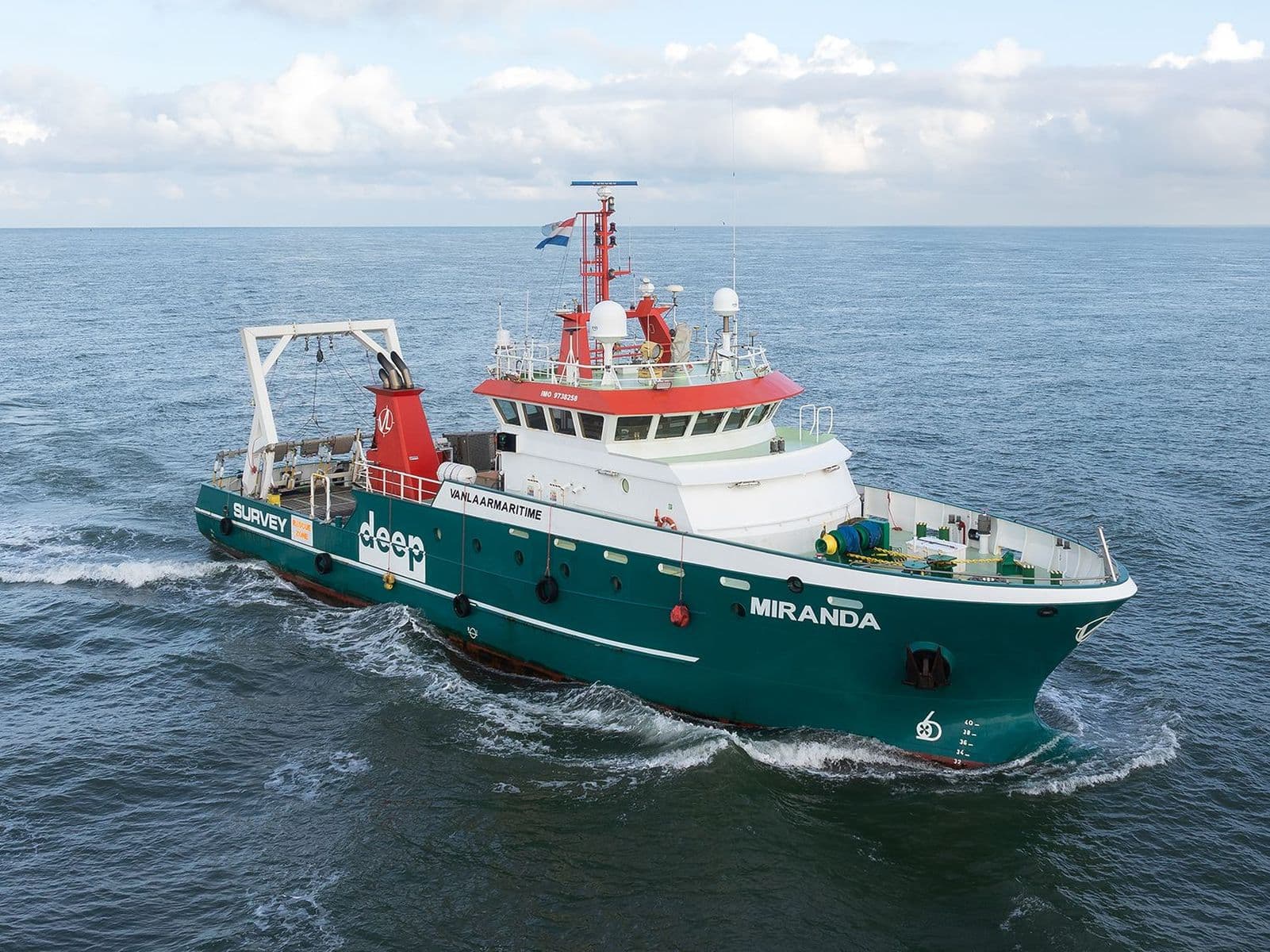
ADVANCED TECHNOLOGY, FIVE VESSELS AND A DRONE
Deep deployed a suite of specialized vessels and platforms to ensure full coverage across nearshore and intertidal zones:
Iron Lady ROTV equipped with 2×6 Caesium Vapour magnetometers: the widest vertical gradiometer setup currently in operation, delivering exceptional data density and quality.
Iron Lady Compact ROTV and MagDrone systems: for seamless magnetic coverage in shallow and transition zones.
A LiDAR aircraft utilizing RIEGL VQ-580 Waveform-LiDAR technology: to capture high-resolution intertidal terrain data.
This advanced multi-platform approach ensured continuous, high-quality data from shoreline to offshore waters, improving survey efficiency, data accuracy, and reducing environmental impact.
Over the course of nearly a year, the following vessels were deployed: Miranda (extended nearshore), Deep Volans (nearshore), and Deep Narwhal, Deep Storm, and Deep Wind for operations in tidal sections. The onshore transition areas were covered using our MagDrone system and airborne LiDAR.

RESULTS FOR OPTIMAL ROUTE SELECTION
Following data acquisition and processing, results were reviewed by TenneT and UXO specialists to establish the Master Target List (MTL), identifying targets above threshold and supporting optimal route selection for safe cable installation.
We are proud to contribute our geophysical and UXO survey expertise to one of Europe’s most ambitious offshore energy programmes. Together with Next Geosolutions and TenneT, we continue to advance safe, sustainable, and innovative solutions that power the future of renewable energy in Europe.

Services Used
See other projects
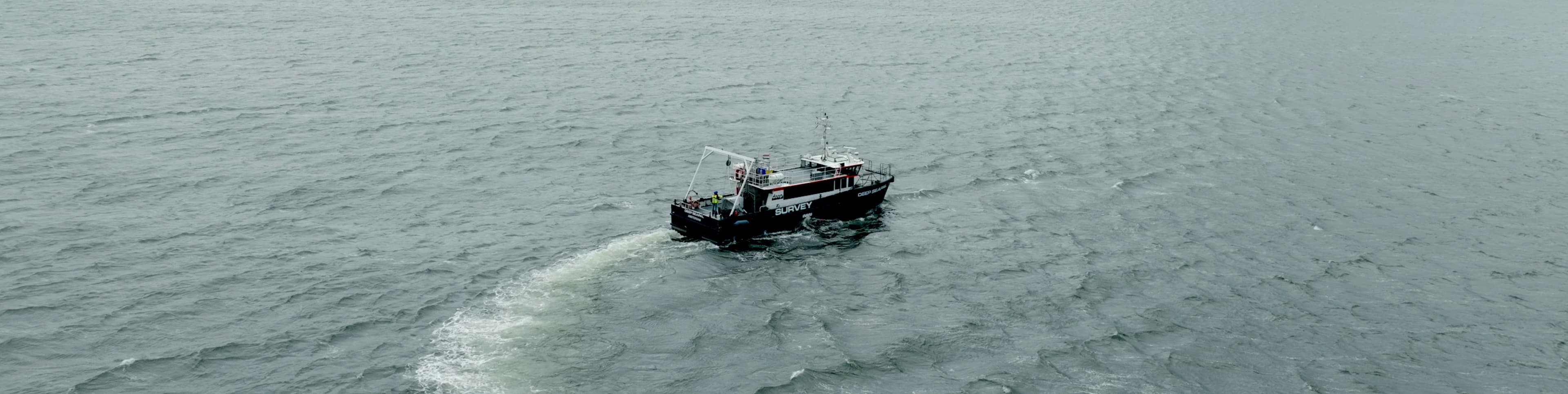
Øresund 400 kV Cable Crossing
Energinet is preparing the replacement of the existing cable system 400 kV power cables and an installation of a new cable system. Together with Ramboll, Deeps surveying team collected data along the cable route.
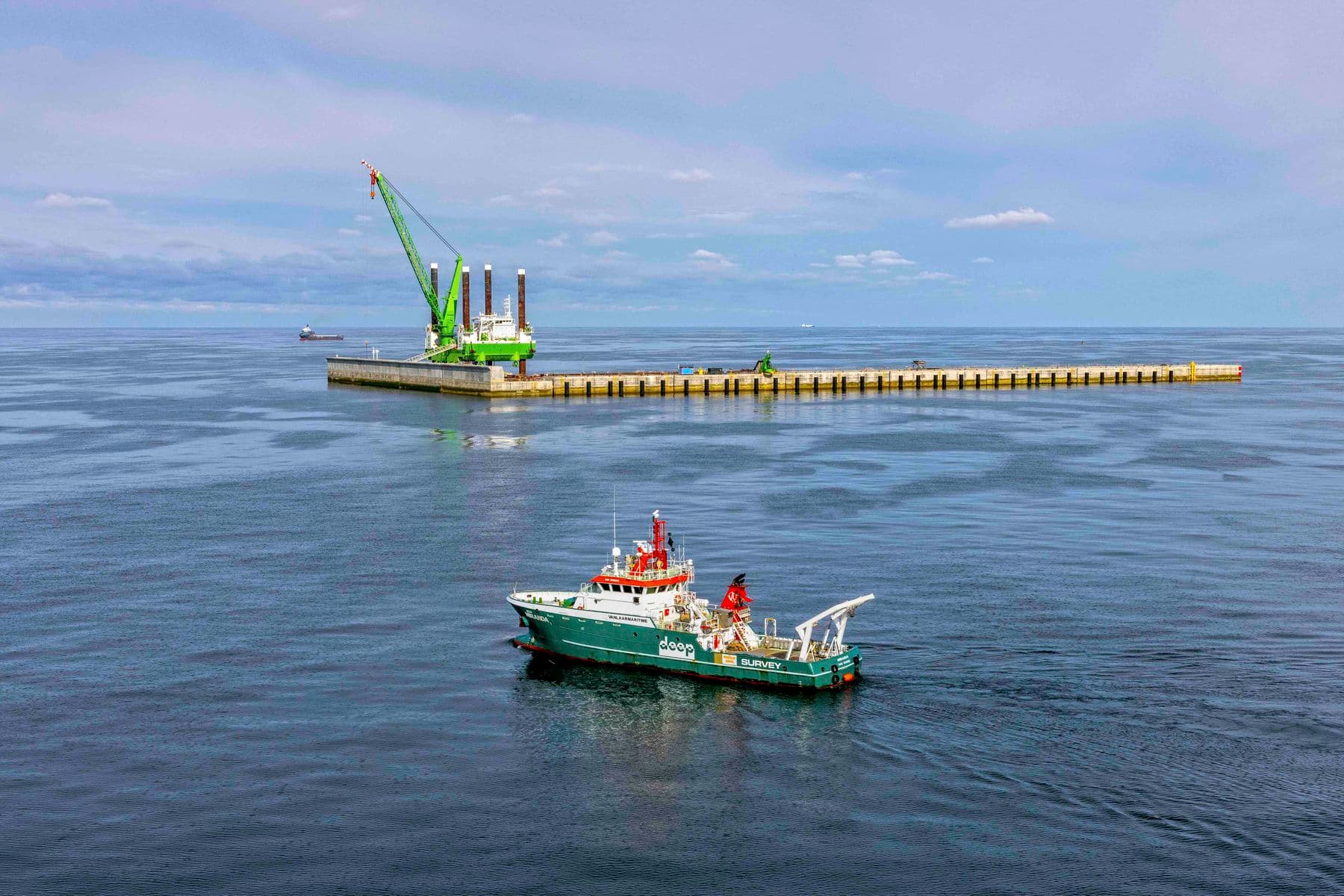
UXO Survey Princess Elisabeth Island
PEI (Princess Elisabeth Island) is the world’s first artificial energy island, located off the coast of Zeebrugge, Belgium. To enable the safe installation of submarine power cables for PEI, Boskalis carries out an extensive unexploded ordnance (UXO) investigation and clearance project. And Deep was involved.
